
Description
What It Is
Human chorionic gonadotropin (HCG) is a glycoprotein hormone consisting of an alpha subunit shared with LH, FSH, and TSH, and a unique beta subunit. HCG binds and activates the luteinizing hormone/chorionic gonadotropin receptor (LHCGR), producing effects functionally analogous to LH in gonadal tissue.
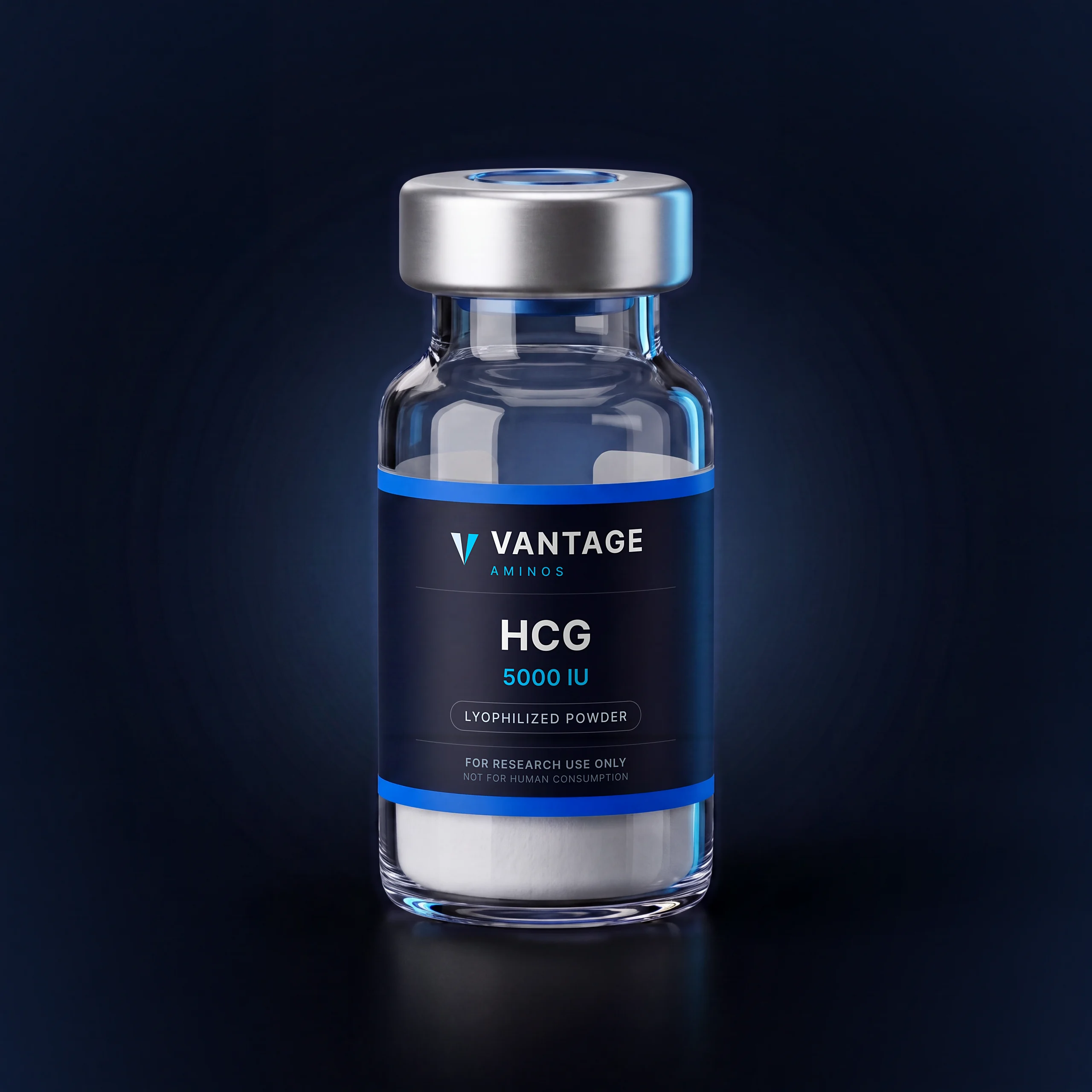
In preclinical research, HCG is used as an LH surrogate for studies requiring sustained gonadotropin receptor activation. It is supplied lyophilized at 5000 IU per vial.
Who It’s For
Researchers in reproductive endocrinology, HPG axis biology, and gonadal steroidogenesis. HCG is a reference compound for LH receptor activation studies and is widely used in models examining testosterone production, Leydig cell biology, and gonadotropin signaling.
Key Research Applications
- LH receptor (LHCGR) activation and downstream signaling studies
- Leydig cell steroidogenesis and testosterone synthesis research
- HPG axis regulation and feedback studies
- Gonadotropin pharmacology (comparative LH/HCG receptor binding)
Handling & Reconstitution
Store lyophilized HCG at 2 to 8°C, protected from light and moisture. Reconstitute with a suitable sterile solvent. Once reconstituted, store at 4°C and use within 30 days. Do not freeze reconstituted solution. Glycoprotein hormones are sensitive to mechanical agitation: gently swirl to dissolve, do not vortex.
Disclaimer: For research use only. Not for human or veterinary use. Not approved by the FDA. 21+

Reviews
There are no reviews yet.