BPC-157 is a synthetic pentadecapeptide: a chain of 15 amino acids (sequence GEPPPGKPADDAGLV) corresponding to a partial sequence identified within human gastric juice. It is studied in preclinical research as a stable peptide construct, most often in models of angiogenesis, nitric-oxide-pathway signaling, and connective-tissue biology. BPC-157 does not occur as a discrete protein in the human proteome, which makes it a fully synthetic research compound.
The “BPC” designation derives from “Body Protection Compound,” the name used in the early gastric-peptide literature where the parent sequence was first characterized. As supplied for research, BPC-157 is a lyophilized powder that is water-soluble on reconstitution and does not require an acidic carrier.
Verified dataVerified compound data
| Property | Value |
|---|---|
| Compound name | BPC-157 (Pentadecapeptide BPC 157) |
| CAS number | 137525-51-0 |
| PubChem CID | 9941957 |
| Molecular formula | C62H98N16O22 |
| Molecular weight | ~1419.5 g/mol |
| Amino acid sequence | Gly-Glu-Pro-Pro-Pro-Gly-Lys-Pro-Ala-Asp-Asp-Ala-Gly-Leu-Val (GEPPPGKPADDAGLV) |
| Length | 15 residues (pentadecapeptide) |
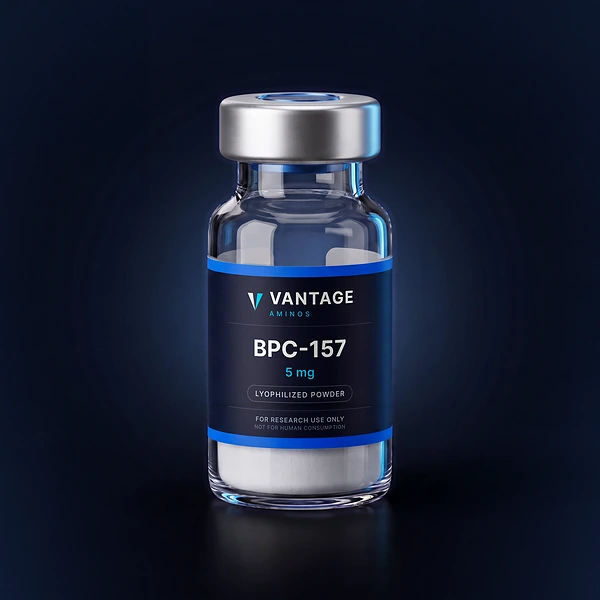
| Physical form | Lyophilized powder |
Data verified against PubChem (CID 9941957) and ChemicalBook (CAS 137525-51-0).
MechanismResearch-context mechanism
In preclinical literature, BPC-157 has been investigated for its interaction with several signaling systems. Research suggests an association with the nitric oxide (NO) system, and studies have examined its relationship to vascular endothelial growth factor (VEGF) expression and angiogenic signaling in tissue models. Additional preclinical work has studied its interaction with growth-hormone-receptor signaling pathways. These mechanisms are described strictly in the context of in vitro and animal research models; they are not established human-use mechanisms.
Research summaryCurrent research summary
BPC-157 appears across a broad preclinical literature spanning musculoskeletal and gastrointestinal tissue models. Reported research areas include:
- Angiogenesis and VEGF-expression studies in tissue models
- Nitric-oxide-pathway modulation
- Tendon, ligament, and connective-tissue research models
- Gastrointestinal mucosal research models
The existing body of work is predominantly rodent and in vitro. There are no large controlled human clinical trials establishing the compound for any therapeutic use, and it is not an FDA-approved drug. BPC-157 has also drawn increased regulatory attention, which makes strict research-context framing essential.
QuestionsFrequently Asked Questions
What is BPC-157?
BPC-157 is a synthetic 15-amino-acid peptide (sequence GEPPPGKPADDAGLV) studied in preclinical angiogenesis and connective-tissue research models. It is a research compound supplied as a lyophilized powder and is not approved for human use.
What is the molecular formula of BPC-157?
The molecular formula of BPC-157 is C62H98N16O22, with a molecular weight of approximately 1419.5 g/mol (PubChem CID 9941957).
What is the CAS number for BPC-157?
The CAS registry number for BPC-157 is 137525-51-0.
What is the amino acid sequence of BPC-157?
The sequence is Gly-Glu-Pro-Pro-Pro-Gly-Lys-Pro-Ala-Asp-Asp-Ala-Gly-Leu-Val (single-letter: GEPPPGKPADDAGLV), a 15-residue pentadecapeptide.
How is BPC-157 stored and reconstituted in a research setting?
Lyophilized BPC-157 is stored at 2 to 8°C, protected from light and humidity. It is reconstituted with a suitable sterile solvent, is water-soluble, and does not require an acidic carrier. Reconstituted material is held at 4°C and used within about 30 days, avoiding repeated freeze-thaw cycles.
Is BPC-157 approved for human use?
No. BPC-157 is not an FDA-approved drug and is not intended for human consumption. It is offered strictly as a research compound for laboratory use.
For research use only. Not for human or veterinary use. Not approved by the FDA. 21+
- HPLC + MS tested, on tested lots
- U.S. synthesized
- Batch COA on the pages that carry one
 $60View compound